Ravi Hair Journal
Top 8 raw Vietnamese hair extensions to boost your sales
The right raw Vietnamese hair extensions can help you build a catalog with clearer selling points, serve more customer needs and create stronger reasons for buyers to reorder. The key is not to stock every product form at once. You need to choose extensions that fit how your customers install, wear or resell hair, then confirm the specification before you invest in bulk.
This guide compares eight raw Vietnamese hair extension options by resale use, product complexity, premium potential and QC risk. You will see which option gives you a practical core product, which one can raise your average order value, and which products are better added only after your supplier has proved consistency.
Start by browsing the current Raw Vietnamese Hair Extensions Wholesale range. Use the comparison below to shortlist the product form, texture, length, color and attachment method your market can sell most clearly.
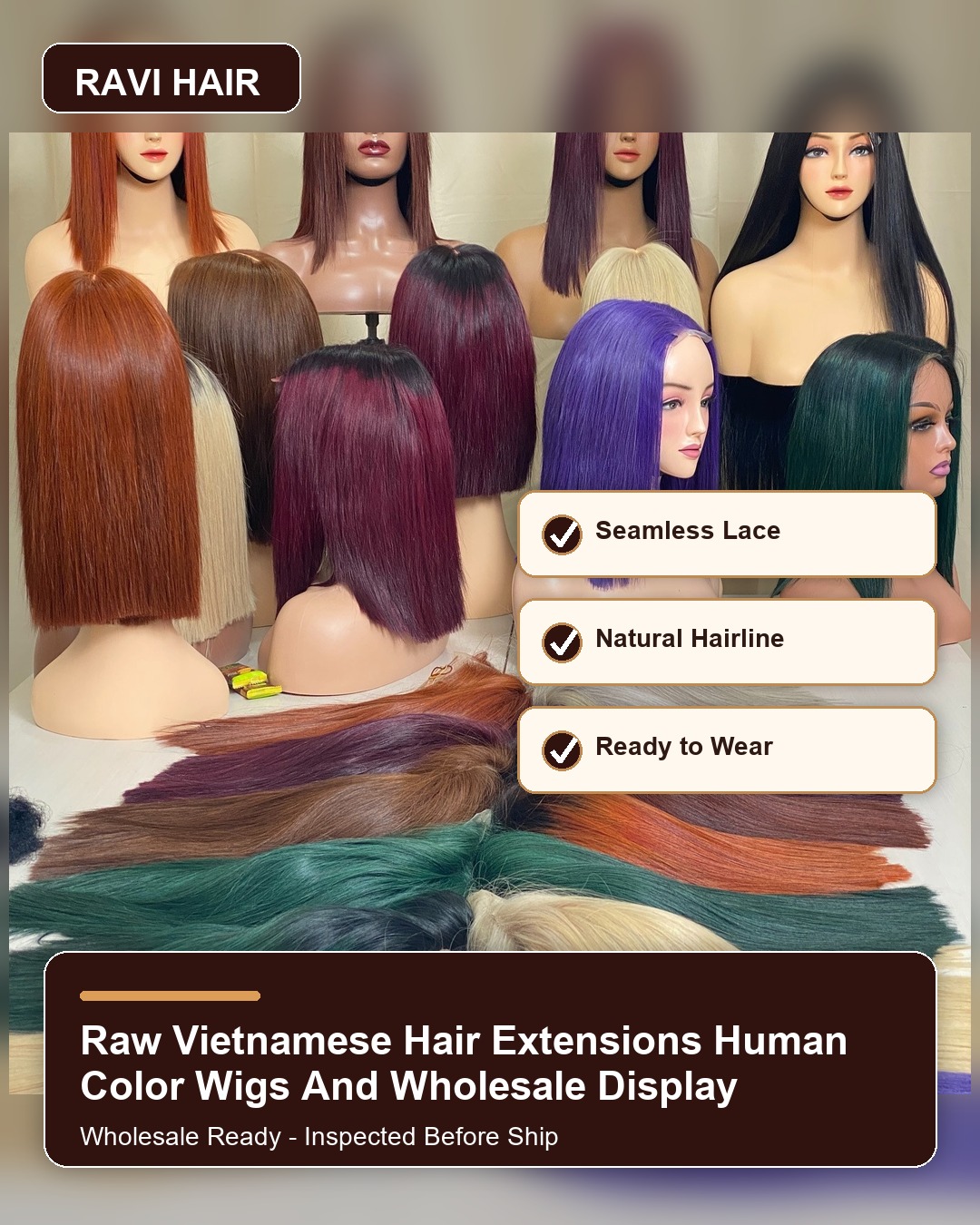
Top 8 raw Vietnamese hair extensions to boost your wholesale sales
| Pick | Extension option | Best for your business | How it supports sales |
|---|---|---|---|
| Best Overall | Raw Vietnamese hair bundles | New vendors, salons and resellers | One flexible product for sew-ins, bundle resale and local wig production |
| Best Core Sample | Natural black or 1B raw extensions | First supplier tests and everyday stock | Easy to explain, photograph and compare without extra color variables |
| Best Premium Upgrade | Fuller-end raw Vietnamese extensions | Premium resellers and salons | Creates a visible reason for customers to pay more |
| Best Salon Set | Raw bundles with closure | Salon installs and closure-wig makers | Lets you sell a coordinated set instead of separate pieces |
| Best High-Value Set | Raw bundles with frontal | Premium wig makers and frontal clients | Supports higher-value orders through wider lace and styling flexibility |
| Best for Production | Raw Vietnamese bulk hair | Braiders, ventilators and custom makers | Gives production buyers flexible material for several finished products |
| Best Ready-to-Sell Option | Raw Vietnamese hair wigs | Beauty stores and online wig sellers | Gives your customer a complete product with no local construction required |
| Best Visual Catalog Option | Raw-positioned wave or curly extensions | Texture-led salons and social sellers | Adds volume, movement and stronger visual differences to your catalog |
How these picks can help you sell more
You do not increase wholesale sales simply by adding more SKUs. You increase your chance of selling when each product solves a clear problem for a specific customer.
We compare the eight options using five commercial questions:
- Can your customer understand the product quickly? A clear product form, texture and use case makes consultation and online selling easier.
- Can you show a visible reason to choose it? Fuller ends, coordinated lace, stronger texture or ready-made construction must create a benefit your customer can see.
- Can you calculate your real selling cost? Weight, length, grade, attachment details, lace and packing affect your cost per bundle, set, install or finished wig.
- Can you verify it before shipping? A product is easier to scale when you can check the same physical points on the sample and bulk batch.
- Can you reorder the same specification? Written product details and current-batch proof help you avoid replacing a successful SKU with something your customers do not recognize.
The best option is therefore not always the most expensive or visually dramatic. It is the product you can explain clearly, prove before shipment and connect to repeat demand in your market.
Best overall: raw Vietnamese hair bundles
Raw Vietnamese hair bundles give you the most flexible starting point because one product can serve several sales channels. You can sell bundles directly, create mixed-length packages, supply salon sew-ins, pair the hair with lace or use it for local wig production.
Best for your business when: you are building a first wholesale catalog, serving both salons and resellers, or need a product that can be sold without committing to one finished cap style.
How this can help your sales: you can present the same bundle by length, texture and fullness level, then let each customer choose how it will be installed. This keeps your first catalog easier to manage while giving you several selling angles from one product family.
What can reduce your margin: an attractive bundle can still create complaints when the weight is unclear, the ordered length is short, the ends are weaker than the promised quality or the weft differs from the approved sample.
Proof to request: ask for the exact hair description, processing history, gram-scale proof, true-length measurement, dry ends, weft close-up, hand-running video and packing label from the batch prepared for you.
Compare current lengths, grades and wholesale configurations in the Raw Vietnamese Hair Bundles Wholesale collection before choosing your first sample.
Choose this when: you want one flexible core product that can generate sales across resale, salon and wig-making customers.
Choose another option when: most of your customers want a complete ready-to-wear wig or a specific attachment system instead of loose wefted hair.
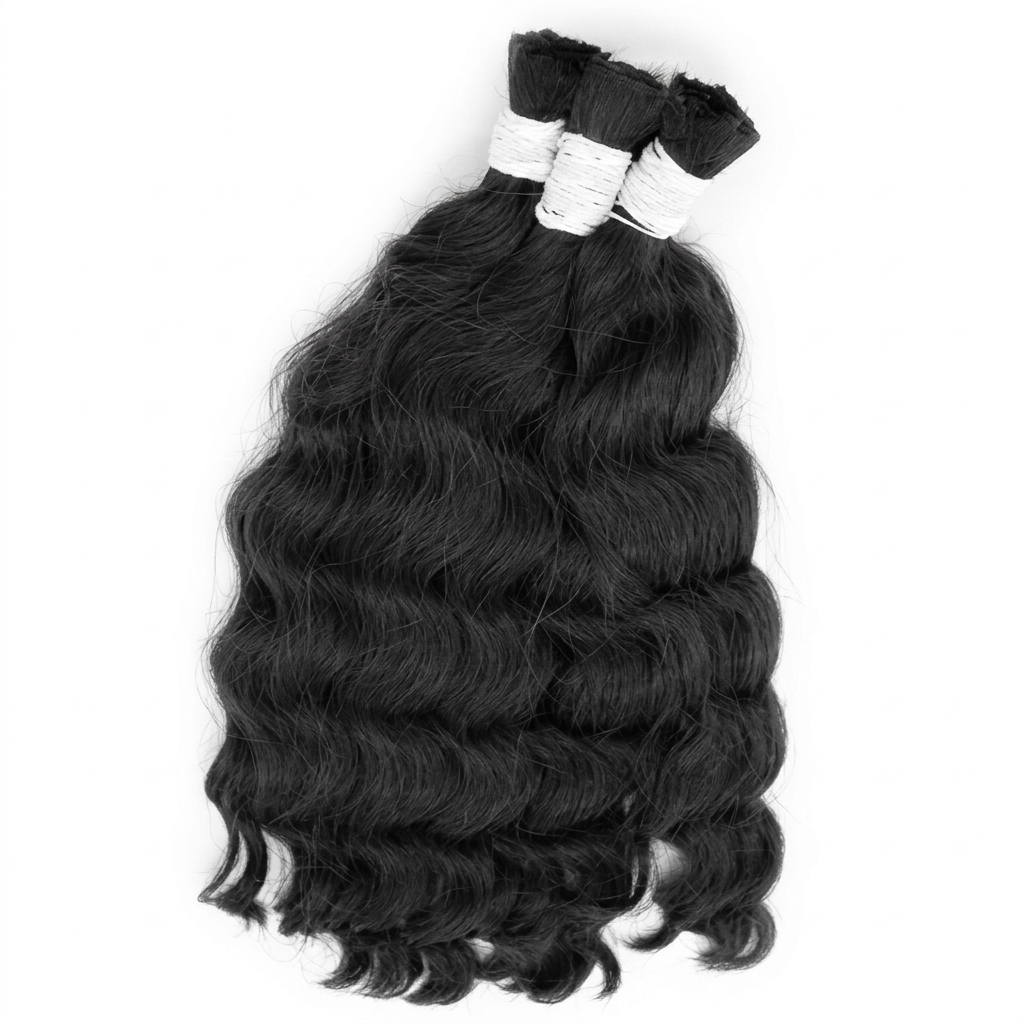
Best core sample: natural black or 1b raw extensions
Natural black or 1B is a practical first sample because you can evaluate the hair without adding blonde, fashion-color or highlight variables. You can focus on the features that determine whether the product is worth reordering: weight, length, ends, weft, texture, handling and consistency.
Best for your business when: you serve customers who regularly buy dark hair, you are testing a new supplier, or you want a dependable core SKU before introducing more processed colors.
How this can help your sales: dark hair is easy to demonstrate in bundle videos, easy to combine with common closure and frontal options, and easier for your sales team to explain than a custom color. A clear core product also gives you a stable reference when customers later ask for wave, curl or premium fullness.
What can reduce customer trust: natural black, 1B, dyed black and color-corrected hair should not be treated as the same specification. If the tone changes between orders, your returning customer may see the difference immediately.
Proof to request: ask for the hair under daylight and neutral indoor light. Confirm whether the color is naturally collected, adjusted or dyed, and review several pieces together rather than approving one isolated bundle.
Choose this when: you want a lower-complexity sample that can become your everyday dark-hair offer.
Choose another option when: your current demand is specifically for blonde, burgundy, piano, highlight or another processed color.
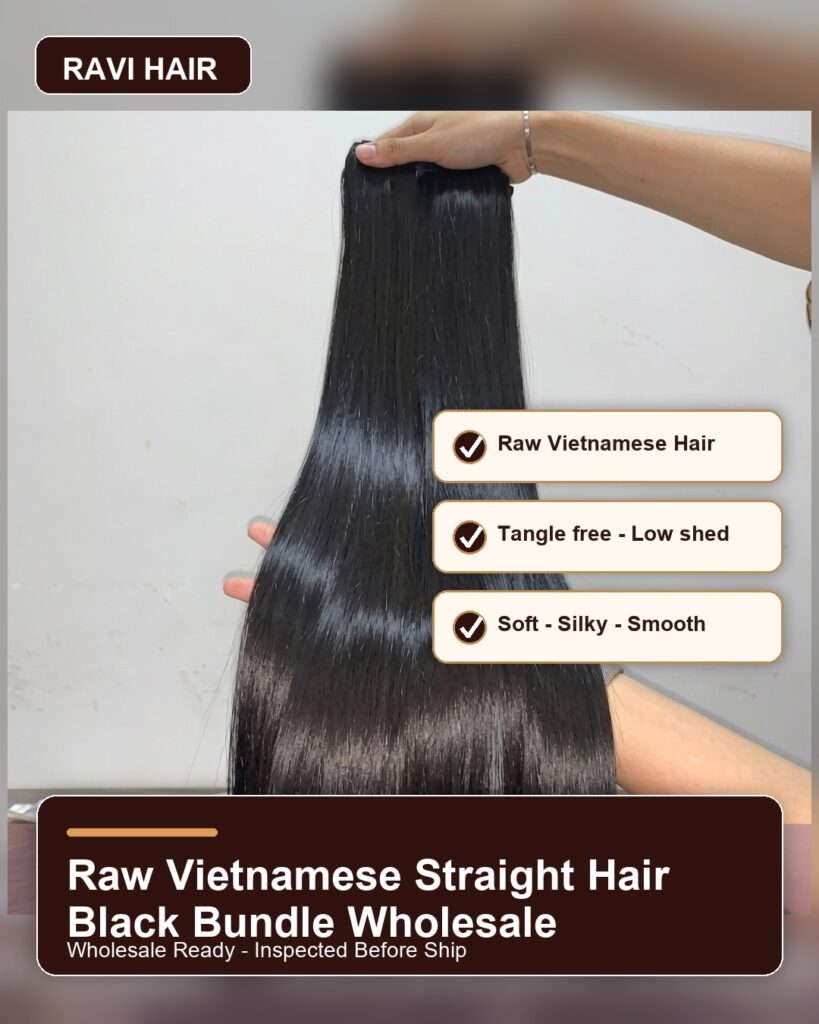
Best premium upgrade: fuller-end raw Vietnamese extensions
Fuller ends give you a visible premium feature your customers can compare. The lower section looks denser, the finished wig or sew-in needs less trimming, and the product can support a higher selling tier when the fullness is genuine.
Best for your business when: your customers already complain about thin bottoms, your salon sells fuller installations, or you need a clear upgrade above an entry-level bundle.
How this can help your sales: instead of asking customers to pay more for a vague “premium quality” label, you can show them the actual lower-section fullness. This creates a concrete reason to choose the higher-value option.
What can reduce your margin: grade names alone do not protect you. If you pay for Double Drawn or another fuller-end specification but receive heavy tapering, you lose both the upsell and the customer’s confidence.
Proof to request: review the bundle dry and gently stretched. Ask for an ends close-up, a hand-spread view, gram proof and a side-by-side comparison between the available fullness levels when possible.
Use Ravi Hair’s quality-control standards to compare weight, true length, drawn grade, ends and current-batch proof before you price a premium tier.
Choose this when: your customer can see and pay for fuller lower lengths.
Choose another option when: your market mainly chooses the lowest price and accepts natural tapering.
Best salon set: raw bundles with closure
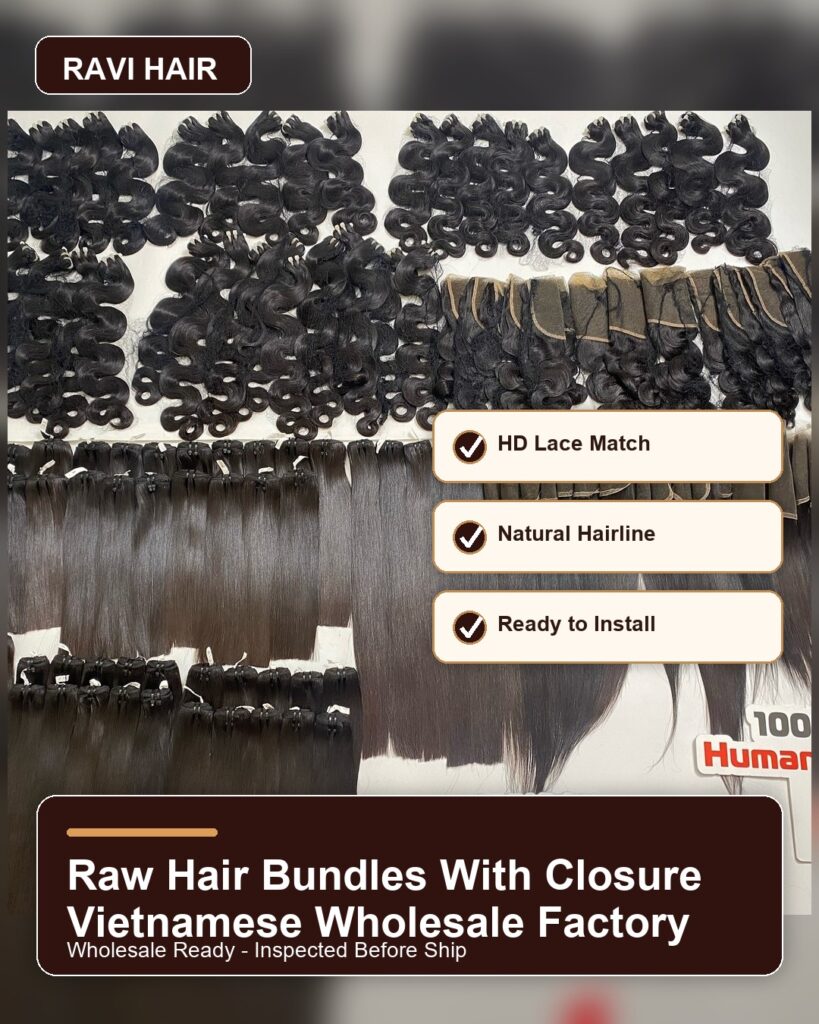
Bundles with a closure allow you to sell a more complete installation package without taking on the full hairline complexity of a frontal. Your customer receives the main hair and a coordinated top piece in one specification.
Best for your business when: you serve salon installs, closure-wig makers, resellers packaging complete sets or customers who prefer easier lace maintenance.
How this can help your sales: a coordinated set increases the value of one order and removes the need for your customer to find a separate lace piece. You can also create clear packages by bundle quantity, length mix, closure size and lace type.
What can reduce customer satisfaction: strong bundles cannot rescue a closure that has visible lace, dark knots, weak parting, uneven density or a different texture and color.
Proof to request: ask to see the closure beside the complete bundle set. Confirm closure size, lace type, knots, parting, density, texture match, color match and the final packing label.
Browse Hair Bundles With Closure Wholesale when your customers want a coordinated install or wig-making set rather than separate hair and lace orders.
Choose this when: you want a higher-value set that remains practical for everyday salon and wig-making customers.
Choose another option when: your customers specifically need an ear-to-ear hairline and deeper styling flexibility.
Best high-value set: raw bundles with frontal
Bundles with a frontal give wig makers and salon customers more hairline coverage and styling freedom than a closure set. This can support a higher order value, but the extra lace area also creates more points that must match the customer’s expectation.
Best for your business when: you sell to experienced wig makers, frontal-install clients or premium customers who understand lace care and styling.
How this can help your sales: you can offer a more customizable finished result, including broader hairline styling and deeper parting according to the confirmed frontal size. This gives premium buyers a clear reason to choose the set over a standard closure package.
What can reduce your margin: thick lace, dark knots, an unnatural hairline, inconsistent density or a frontal that does not match the bundles may lead to rework, discount requests or complaints.
Proof to request: confirm frontal dimensions, lace type, knot appearance, hairline, parting depth, density transition, texture match, color match and inside packing before the order is released.
Choose this when: your customers will pay for wider lace and more styling control.
Choose another option when: you are still testing the supplier’s basic hair, communication and lace consistency.
Best for production: raw Vietnamese bulk hair
Raw Vietnamese bulk hair gives you loose material instead of machine-wefted bundles. This is useful when your customer earns money by turning hair into another product, such as braiding hair, ventilated lace, handmade wigs, tips or custom extension systems.
Best for your business when: you serve braiders, ventilators, custom wig makers or production teams that need control over the final construction.
How this can help your sales: one well-specified bulk-hair line can support several B2B uses. You are not selling only a finished style. You are supplying material your production customer can convert into services or products for different end users.
What can reduce your customer’s output: mixed direction, poor alignment, unclear lot weight, short length or weak ends can create tangling and waste after the hair is loosened for production.
Proof to request: ask for the loose hair opened out, a hand-running video, direction and alignment explanation, gram-scale proof, true-length measurement, ends close-up and packing by length, texture, color and weight.
The broader Raw Vietnamese Hair Extensions range can help you compare loose hair with tape-in, clip-in, tip and machine-weft formats before you decide what your production customers actually need.
Choose this when: your buyer creates value through braiding, ventilation or custom construction.
Choose another option when: your customers want hair that is already wefted, attached or ready to wear.
Best ready-to-sell option: raw Vietnamese hair wigs
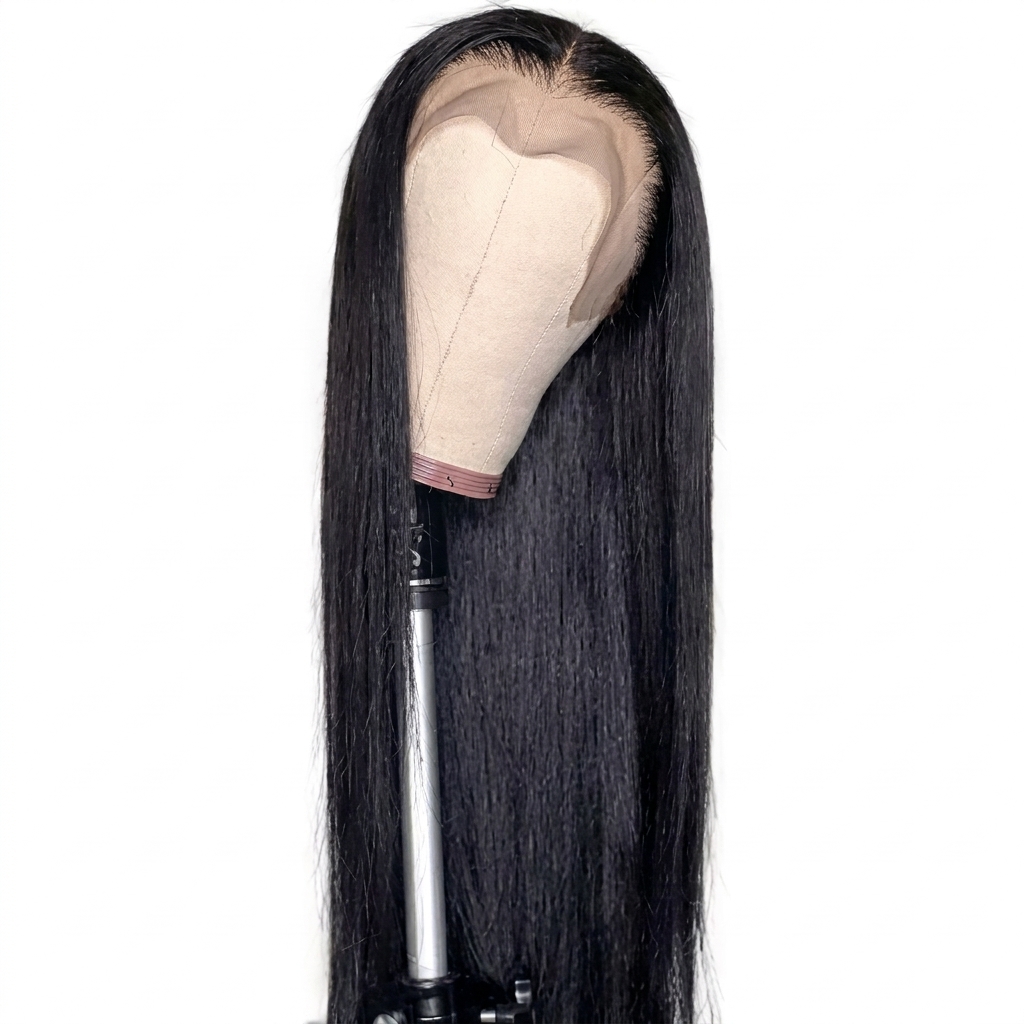
A finished wig gives your customer a complete product instead of separate hair, lace and construction work. This makes the result easier to photograph and understand, which can help online sellers and beauty stores present a clear final look.
Best for your business when: your customers want ready-made units, your store sells completed styles, or you have enough demand to manage wig variations by construction, cap, lace, density, texture, length and color.
How this can help your sales: your customer can choose the finished appearance without arranging a local wig maker. You can also market the wig by use case, such as an everyday closure wig, premium frontal unit, straight work wig or textured statement style.
What can reduce your margin: wigs combine hair QC with construction QC. Good hair can still become an unsellable unit when the cap does not fit, the lace is visible, the knots are dark, the density is uneven or the hairline looks unnatural.
Proof to request: ask for an inside-cap view, lace and knot close-ups, parting, hairline, density, true length, texture, ends and the actual packing for your order.
Compare ready-made constructions in the Vietnamese Human Hair Wigs Wholesale collection before deciding whether a completed wig or locally constructed bundle set gives you better control.
Choose this when: your market values convenience and you can manage the extra construction details.
Choose another option when: you need the easiest first product to inspect or your wig makers prefer to control the cap and lace locally.
Best visual catalog option: wave or curly extensions
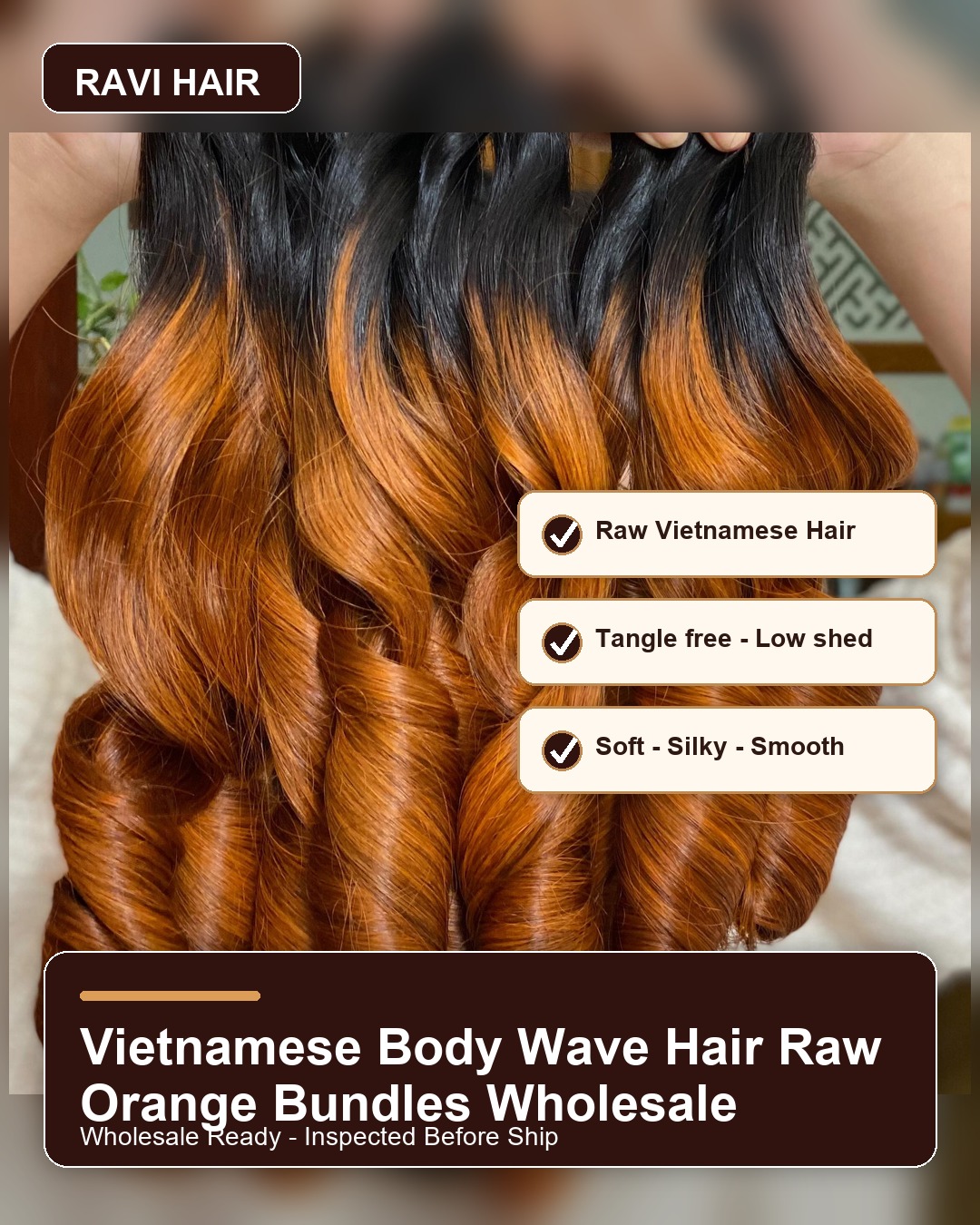
Body Wave, Deep Wave and Curly extensions give your catalog visible movement and volume. They can create stronger product videos and help you separate your texture offers more clearly than a collection built only around straight hair.
Best for your business when: your customers already request textured installs, your social selling relies on visual product differences, or you want to expand beyond a straight-hair core range.
How this can help your sales: each texture gives you a separate customer promise. Body Wave offers soft movement, Deep Wave provides stronger repeated definition, and Curly creates greater volume and a bolder finished identity.
What can reduce repeat orders: a styled catalog pattern may not represent how the hair behaves after water and drying. You also need to describe whether the texture is naturally selected, steamed, heat-styled or otherwise created rather than using “raw” as a blanket promise.
Proof to request: ask for dry-state texture, wet-to-dry comeback, stretched length, gram weight, weft, ends, detangling and several pieces returning with a similar formation.
Compare the more defined Vietnamese Deep Wave Hair range with Vietnamese Curly Hair before choosing the pattern your customers can identify and maintain.
Choose this when: you have real texture demand and can give customers the correct care expectations.
Choose another option when: you need the simplest first sample or the supplier cannot explain how the pattern is formed.
Compare the eight options by sales use and qc risk
| Extension option | Sales role | First-sample complexity | Main proof you need | Best next action |
|---|---|---|---|---|
| Raw hair bundles | Core flexible stock | Lower | Weight, length, weft and ends | Test one dark straight or natural-texture bundle |
| Natural black or 1B | Everyday dark-hair offer | Lower | Color honesty and batch consistency | Approve one clear color reference |
| Fuller-end extensions | Premium upgrade | Medium | Dry and stretched end fullness | Build two clearly separated price tiers |
| Bundles with closure | Complete salon set | Medium | Lace, knots and bundle match | Test one coordinated set |
| Bundles with frontal | High-value premium set | Medium-high | Hairline, lace, knots and parting | Add after basic hair and lace approval |
| Bulk hair | Production material | Medium | Direction, alignment, weight and length | Match one sample to one production use |
| Finished wigs | Ready-to-sell stock | Higher | Cap, lace, density and construction | Start with a simple closure wig |
| Wave or curly extensions | Visual texture line | Medium-high | Pattern formation and wet-to-dry return | Add one proven texture at a time |
Build your first order around how you make money
Your best opening mix depends on where your profit comes from. Do not copy another vendor’s order without matching it to your own customer journey.
- For direct bundle resale: begin with natural black or 1B bundles in a controlled length range. Add a fuller-end upgrade after customers understand the difference.
- For salon installs: combine core bundles with one closure format. Add frontals only when your clients regularly request broader hairline styling.
- For local wig production: use bundles, closures, frontals or bulk hair so you can control cap construction, density and final styling.
- For beauty-store shelves: select a small number of finished wigs with clear differences rather than many nearly identical units.
- For WhatsApp and social selling: keep a dark core range, then add one visually distinct wave, curl or color that photographs clearly.
- For production buyers: sell bulk hair by exact use, weight, length, alignment and packing instead of calling every loose-hair product the same.
A focused order gives you cleaner product media, simpler consultation, fewer packing errors and a more useful reference for your first reorder.
Use raw, virgin and remy claims to protect your reputation
Your customer buys the promise you publish, not the private explanation your supplier gives after a problem. Before you use raw, virgin or Remy in your own listing, record exactly what the term means for that product.
- Raw: confirm the collection and processing history instead of assuming the word means untouched in every case.
- Virgin: confirm whether the hair has received chemical color or treatment.
- Remy: confirm cuticle direction and alignment rather than treating it as a synonym for one-donor raw hair.
- Texture: record whether the supplied pattern is naturally selected, steamed, heat-styled, chemically created or refined by another process.
- Color: separate natural color, adjusted color and professionally colored products.
Clear wording helps you sell with confidence because your customer receives the product you described. It also prevents you from building a premium price around a claim that cannot be demonstrated.
Control your margin before choosing the lowest quote
Your true cost is not only the supplier’s headline price. It is the amount you spend to receive a sellable product that matches the specification your customer expects.
Before comparing quotes, align these fields:
- Product form: bundle, loose bulk hair, attachment extension, closure set, frontal set or wig.
- Hair description and processing history.
- Length and measurement method.
- Weight per bundle, set, pack, lot or finished wig.
- Fullness or drawn-grade specification.
- Texture and how the pattern is formed.
- Color and placement.
- Lace size, lace type, knots, density and hairline where relevant.
- Attachment count or piece count for tape-in, clip-in or tip systems.
- Packing, payment, production and shipping scope.
A cheaper quote can become the more expensive purchase when you must add hair, replace weak lace, discount a mismatched texture or absorb complaints. A written specification helps you compare the real cost per product you can resell.
Test a sample that represents the product you plan to sell
Your sample should not be a random low-cost item. It should represent the specification you expect to reorder.
Before payment, record:
- Exact product form and intended customer.
- Hair claim and processing history.
- Texture and texture-formation method.
- Color.
- Length and measurement method.
- Weight.
- Fullness or grade.
- Weft, direction or attachment details.
- Lace and construction details where relevant.
- Required photos, videos and packing proof.
Compare the evidence you receive with Ravi Hair’s published hair-quality checks. This gives you one checklist for the sample and the later bulk batch.
After the sample arrives, inspect it before changing it. Weigh and measure the hair, review the ends, check normal shedding and handling, wash and air-dry textures where appropriate, inspect lace or attachments, and compare the result with the proof you approved.
Approve the actual bulk batch, not only the sample
A successful sample shows that the specification can be produced. It does not prove that every item in your bulk order already matches it.
Before shipping, confirm:
- The final order list by product form, length, texture, color, grade and quantity.
- Weight per item and total quantity.
- True-length measurement.
- End fullness.
- Weft, direction, alignment or attachment construction.
- Texture match and wet-to-dry behavior where relevant.
- Lace, knots, parting, hairline, cap and density where included.
- Color consistency across the complete order.
- Variation labels and packing list.
- Current-order photos or videos rather than old catalog media.
Review the Quality Guarantee before approval so your invoice, written specification, proof and claim conditions support the same order.
When the actual batch matches your approved reference, you have a stronger basis for marketing, customer consultation and the next reorder.
Confirm payment, shipping and claim steps before you promise customers
Your customer may ask when the hair will arrive, what happens if the order differs and whether the unit can be changed after inspection. You need those answers before you take deposits or publish delivery promises.
Use the Order & Payment Policy to record the final specification before payment. Check the Shipping & Delivery Policy for the applicable delivery route, and read Returns & Exchanges before washing, cutting, coloring, installing or altering any item that may require review.
This protects your selling schedule and helps you give customers conditions you can actually honor.
Common mistakes that can slow your raw-extension sales
- Buying too many variations first: you divide your cash across products before you know which one customers will reorder.
- Selling the word raw instead of the product: customers still judge weight, length, ends, texture and construction.
- Using one price tier with no visible difference: a premium option needs proof customers can see, such as fuller ends or a stronger lace specification.
- Choosing finished wigs before proving basic hair: you add cap, lace, density and hairline risk to an untested supply relationship.
- Ordering texture from wet catalog photos: the dry result and wet-to-dry return may be different.
- Approving a closure or frontal separately: the lace hair may not match the bundles in color, texture or density.
- Using old sample videos for a new bulk order: your customers receive the current batch, not the old media.
- Failing to record the final specification: repeat orders become harder when the successful combination exists only in chat fragments.
- Promising bleach or recoloring results without a strand test: the claim can damage your reputation when the actual batch reacts differently.
Choose ravihair when you need a clearer product specification
Contact RaviHair when you need to turn customer demand into a written raw Vietnamese hair extension specification before you pay.
Share your market, buyer type, product form, texture, length, fullness level, color, quantity, lace or attachment needs and destination. You can then request the weight, length, ends, weft, direction, texture, lace, construction and packing proof relevant to that product.
This helps you choose inventory based on what your customers can install, wear, resell and reorder, not only on a supplier photo or a premium-sounding label.
WhatsApp RaviHair: +84 818 293 277
Ask Ravi Hair
Get advice for your next order
Factory support
Make the guide practical
Ask for current stock videos, sample guidance, packing proof, and export support before you approve an order.
- Real product video before shipping
- Sample support before bulk buying
- Clear consultation for your market