Ravi Hair Journal
Top Vietnamese hair extensions for wholesale buyers
If you are looking for Vietnamese hair extensions, you are probably comparing product types before choosing what to sell, install, import or test. You may be considering bundles, weft hair, wigs, closures, frontals, bulk hair, tape-ins, clip-ins, keratin tips or ponytail extensions.
For product options that match the buying criteria in this guide, browse Raw Vietnamese Hair Extensions.
That is the right way to think. “Hair extensions” is a broad term. A salon owner, wig maker, online reseller, beauty store and importer may all search the same keyword, but they do not need the same product.
For wholesale buyers, the safest choice is not always the most popular-looking product. The safer choice is the product your buyers understand, your supplier can prove, and your business can reorder without too many complaints.
RaviHair is a Vietnamese hair supplier, so this is not an independent ranking. It is a supplier-side product guide to help you compare Vietnamese hair extension types, understand the risk of each option, and request the right proof before sample or bulk order.
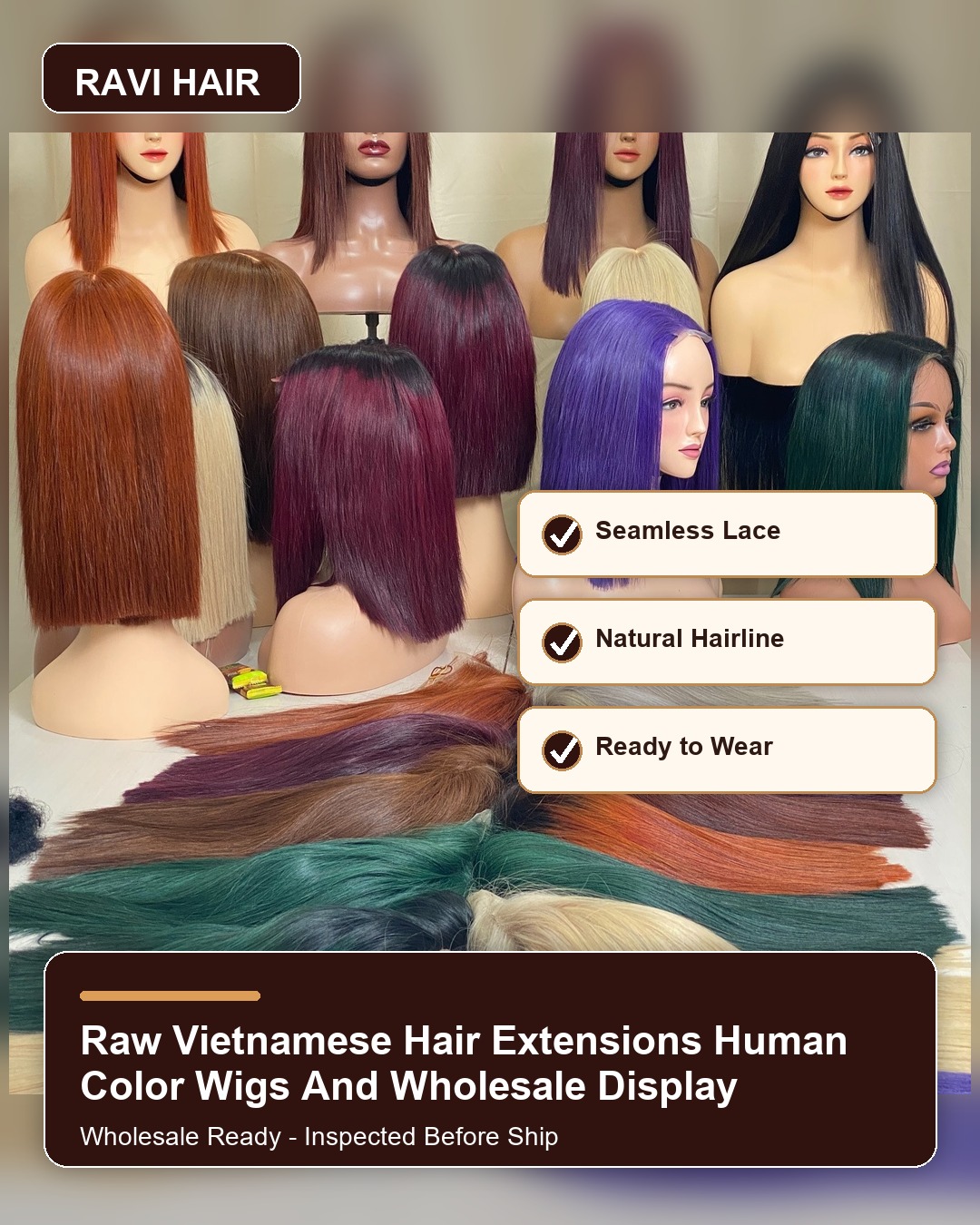
Quick comparison: Vietnamese hair extension options
The best Vietnamese hair extension depends on how your buyer wants to use the hair, how much installation support they need, and how much product proof you can verify before shipping.
|
Extension option |
Best for |
Why it is worth testing |
Main risk to check |
|
Vietnamese hair bundles |
Salons, resellers, wig makers |
Flexible for sew-ins, wigs and resale |
Weight, length, weft and ends must be checked |
|
Vietnamese weft hair |
Salons, wig makers, production buyers |
Useful for sew-ins and wig construction |
Stitching and shedding risk |
|
Vietnamese wigs |
Ready-to-wear buyers |
Easier to sell as complete product |
Cap, lace, density and hairline proof |
|
Vietnamese closures and frontals |
Wig makers, install sets |
Complete top or hairline area |
Lace match, knots and density risk |
|
Vietnamese bulk hair |
Braiders, ventilators, custom makers |
Flexible raw material |
Alignment, weight and direction risk |
|
Vietnamese tape-in extensions |
Salon clients, semi-permanent installs |
Flat, lightweight, natural-looking install |
Tape quality and adhesive life |
|
Vietnamese clip-in extensions |
Retail buyers, temporary styling |
Easy to apply and remove |
Clip strength and hair weight |
|
Vietnamese keratin tip extensions |
Professional salon installs |
Strand-by-strand natural movement |
Bond quality and installation skill |
|
Vietnamese ponytail extensions |
Retail and fashion buyers |
Easy visual transformation |
Attachment strength and weight |
If you are a new wholesale buyer, do not test every extension type at once. Start with the product your buyers already understand, then expand after your supplier proves consistency.
How we compare Vietnamese hair extensions
We compare Vietnamese hair extensions from a wholesale buyer’s perspective. The goal is not to list every possible product name. The goal is to help you choose the extension type that fits your buyer, your sales channel, your QC ability and your reorder plan.
The main comparison points are:
-
Buyer fit: Is the product better for salons, resellers, wig makers, beauty stores, retail buyers or importers?
-
Product form: Is it bundles, weft hair, wig, closure, frontal, bulk hair, tape-in, clip-in, keratin tip or ponytail?
-
Hair type: Is it raw, virgin, Remy, processed or mixed?
-
Length: Is straight hair measured naturally and wavy/curly hair measured after stretching?
-
Weight: Is the quote based on bundle, pack, set, wig or kg?
-
Drawn grade: Is the hair Single Drawn, Double Drawn or Super Double Drawn?
-
Texture: Is it straight, bone straight, body wave, loose wave, deep wave, water wave, curly, kinky straight or kinky curly?
-
Color: Is it natural black, 1B, 613, brown, burgundy, highlight, piano or ombre?
-
Construction: Is the weft, clip, tape, tip, cap, lace or attachment strong enough?
-
Processing history: Has the hair been dyed, bleached, steamed, coated, acid-washed, silicone-coated or chemically treated?
-
Sample-to-bulk consistency: Does the actual bulk shipment match the approved sample and current-batch proof?
For wholesale buyers, hair quality and construction quality must be checked together. Good hair can still create complaints if the tape slips, clips are weak, lace is visible, or the weft sheds heavily.
Best first test: Vietnamese hair bundles
Vietnamese hair bundles are usually the safest first extension product for wholesale buyers. Bundles are flexible, easy to inspect and easy to explain to customers.
Best for: salons, resellers, wig makers, new vendors, order collectors and importers.
Why it is worth testing: buyers can use bundles for sew-ins, custom wigs, ponytails or resale. Bundles also let you compare supplier quality clearly because you can inspect weight, true length, weft, ends, shedding and texture.
Vietnamese straight bundles are often the easiest first sample. Body wave bundles are also practical because they give soft volume and visual appeal. Deep wave, water wave and curly bundles can sell well, but they need wet-to-dry proof before bulk.
For many wholesale markets, one bundle is commonly treated as 100g, and 1kg equals 10 bundles. Always confirm this standard before comparing price.
Wholesale risk to check: the main risk is underweight or thin-end bundles. A bundle can look full in supplier photos but arrive lighter than expected or thinner at the bottom.
Proof to request before sample: ask for gram scale proof, true length measurement, weft close-up, ends close-up, texture close-up, comb-through video, shedding check and packing proof.
What to confirm before bulk: confirm length, weight, grade, texture, color, ends, weft, processing history and current-batch proof.
Choose this if: you want a flexible extension product with lower first-test complexity.
Skip this if: your buyers only want ready-to-wear wigs or professional extension systems.
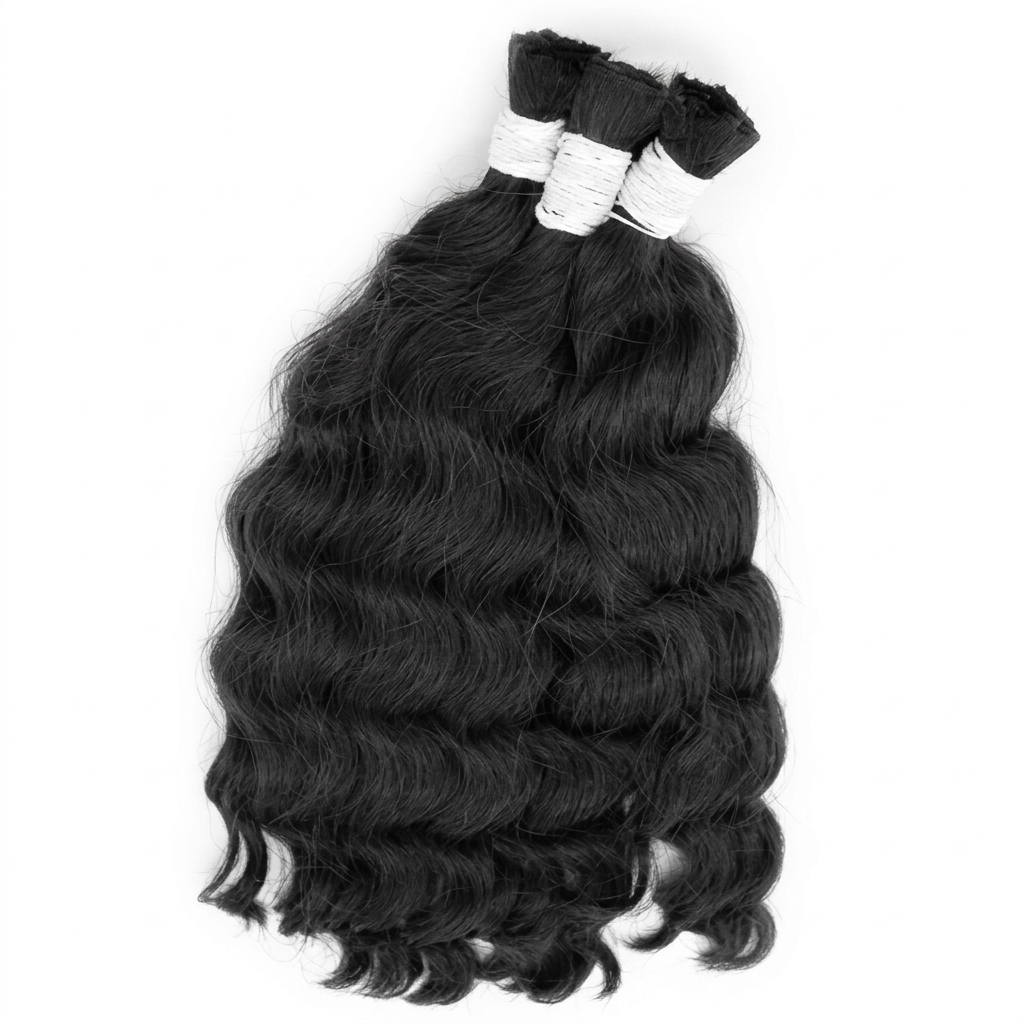
Best for sew-ins and wig making: Vietnamese weft hair
Vietnamese weft hair is useful for salons, wig makers and production buyers who need hair sewn onto a track. In many cases, hair bundles are also wefted hair, but buyers may search “weft hair” when they are focused on install or wig construction.
Best for: salons, wig makers, sew-in buyers, production buyers and custom unit makers.
Why it is worth testing: weft hair is practical for sew-ins, wig making and hairpiece production. If your business sells to stylists or wig makers, weft quality becomes very important.
A good weft can reduce shedding risk and make installation easier. A poor weft can create complaints even when the hair itself looks good.
Wholesale risk to check: weak stitching. Even good hair can create complaints if the weft sheds heavily, feels bulky, unravels or is difficult to sew.
Proof to request before sample: ask for weft close-up, double-weft or machine-weft details if relevant, shedding test, pull test, gram proof, length proof and ends proof.
What to confirm before bulk: confirm weft quality on the actual batch, not only on one sample bundle.
Choose this if: your buyers care about install quality or wig construction.
Skip this if: the supplier only shows the hair surface and never shows the weft.
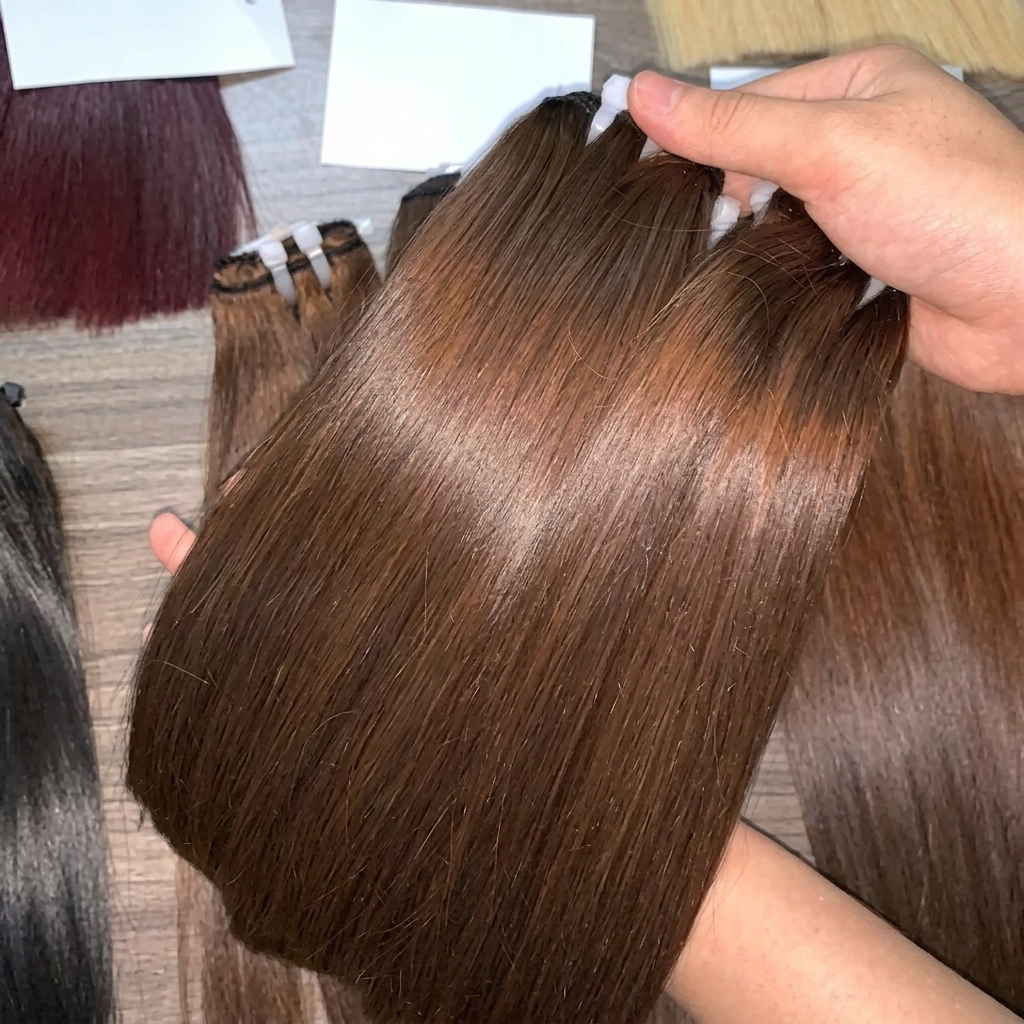
Best ready-to-wear option: Vietnamese human hair wigs
Vietnamese human hair wigs are useful when your buyers want a complete ready-to-wear product instead of separate bundles and lace pieces.
Best for: wig sellers, beauty stores, salons, online vendors and buyers who want finished products.
Why it is worth testing: a finished wig can be easier to explain to retail buyers because they can choose by length, texture, lace type, density and cap style. Wigs can also increase order value because the buyer is purchasing a complete product.
Wholesale risk to check: wigs have higher QC complexity than bundles. A wig has more components: hair quality, cap size, lace type, knots, hairline, density, parting, texture, true length and construction.
A wig may be made from 2–3 weft bundles plus one closure or frontal. This means the final product depends on both hair quality and construction quality.
Proof to request before sample: ask for inside-cap photos, lace close-up, knot proof, hairline video, density view, parting proof, true length measurement, texture proof, comb-through video and packing proof.
What to confirm before bulk: confirm wig type, cap size, lace size, lace type, density, knots, hairline, length, color, texture, packing and current-batch proof.
Choose this if: your buyers want ready-to-wear products.
Skip this if: you are testing a new supplier and want the lowest-risk first sample.
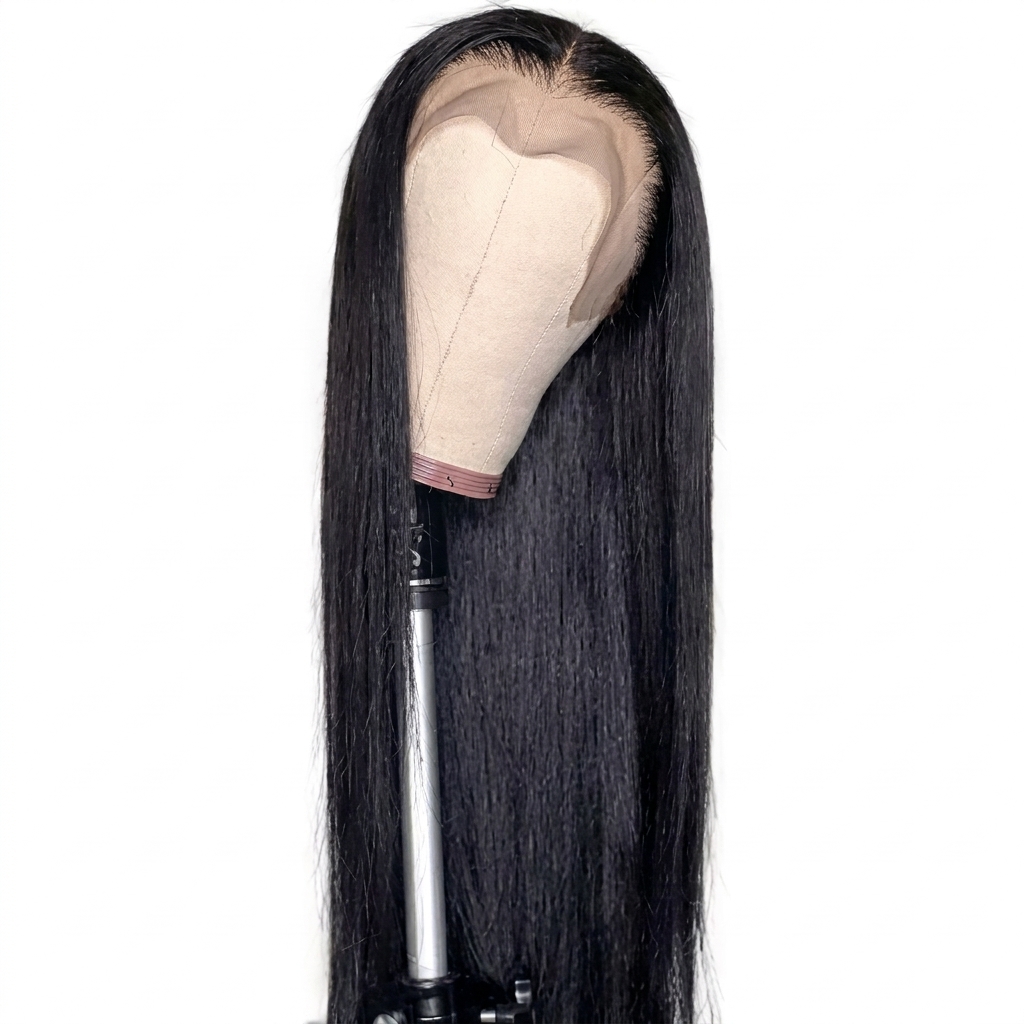
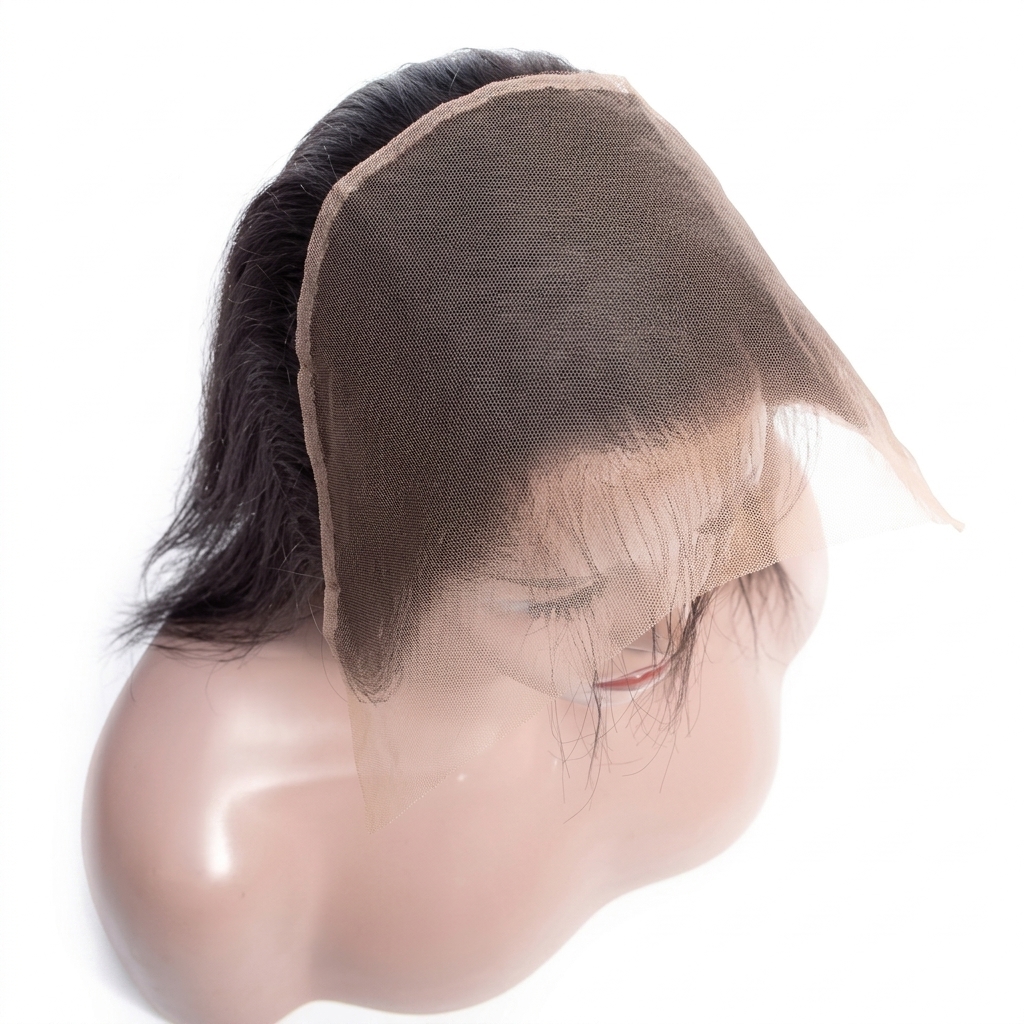
Best for install sets: Vietnamese closures and frontals
Vietnamese closures and frontals are not always described as “extensions” by every supplier, but they are essential add-on products for wigs and installs.
Best for: wig makers, salon owners, bundle-set sellers and vendors selling bundles with closure or bundles with frontal.
Why it is worth testing: closures and frontals help buyers complete the top or hairline area. They can increase order value and make bundle deals more complete.
Closures are usually easier to manage than frontals. A 4×4 closure is more basic, a 5×5 closure gives more parting space, and a 6×6 closure gives a wider top area. Some buyers also use smaller closures such as 2×4 or 2×6 for simpler parting needs.
Frontals offer more styling flexibility. A 13×4 frontal gives ear-to-ear coverage with moderate parting depth, while a 13×6 frontal gives deeper parting.
Wholesale risk to check: lace quality. If the lace is too visible, knots are too dark, density is uneven, or hairline looks unnatural, the whole install can disappoint the buyer.
Proof to request before sample: ask for lace close-up, knot close-up, parting proof, density view, hairline video, texture match, color match and packing proof.
What to confirm before bulk: confirm lace size, lace type, density, knots, hairline, parting, texture match, color match and current-batch proof.
Choose this if: your buyers need complete installs or wig construction.
Skip this if: the supplier cannot show lace details before shipping.
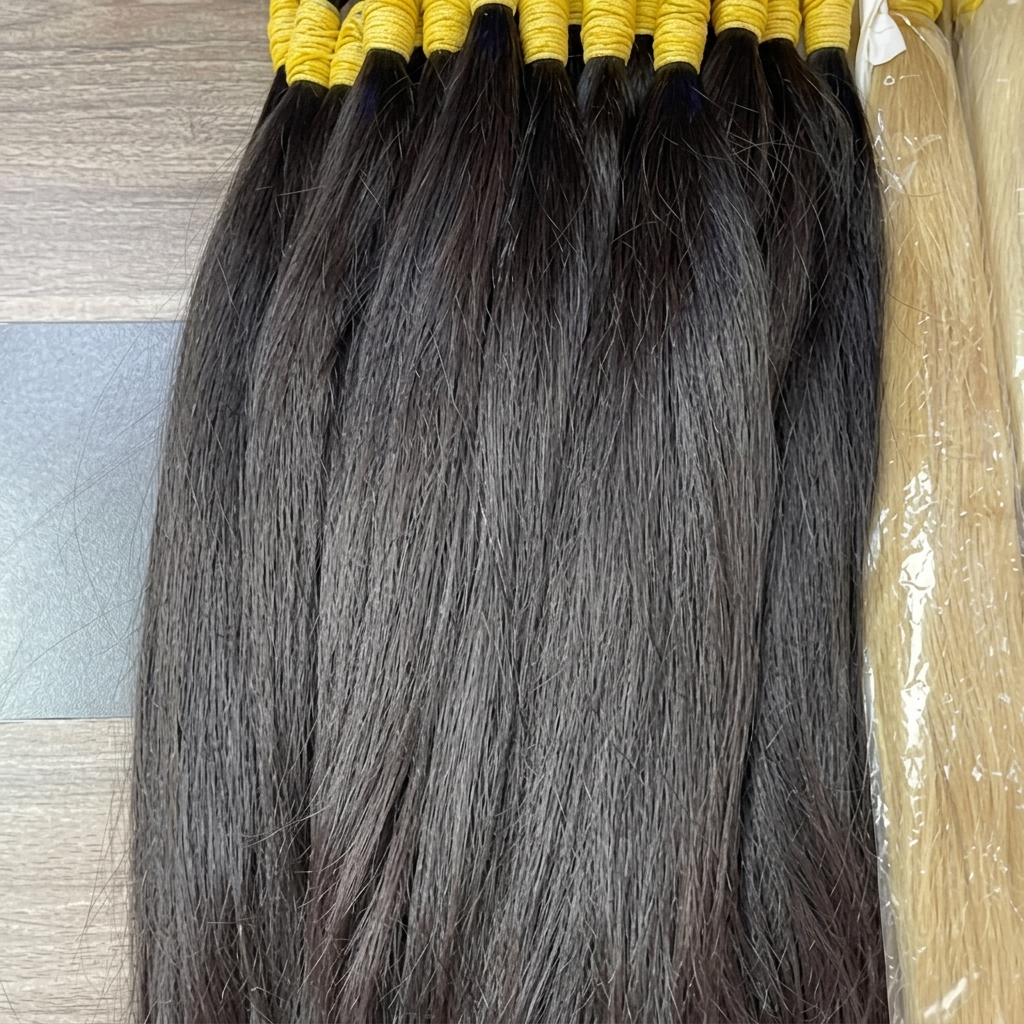
Best for custom production: Vietnamese bulk hair
Vietnamese bulk hair is useful for buyers who need raw material instead of finished wefted products. It can be used for braiding, ventilating, handmade wigs, closures, frontals and custom production.
Best for: braiders, custom wig makers, ventilators, production buyers and buyers making specialized products.
Why it is worth testing: bulk hair gives production flexibility. It can be used in different methods depending on your business: braiding, ventilation, handmade wig production, closure/frontal making, tips or other custom work.
Wholesale risk to check: direction and alignment. If the hair direction is mixed, tangling risk can increase. If the weight or length is unclear, your cost and finished product quality become harder to control.
Proof to request before sample: ask for gram scale proof, true length measurement, texture close-up, ends proof, direction or alignment explanation, comb-through video, wet-to-dry proof for wave or curl and packing proof.
What to confirm before bulk: confirm total kg, length, texture, color, direction, alignment, processing history and packing method.
Choose this if: your buyers make custom products.
Skip this if: your customers mainly want ready-to-use bundles or wigs.
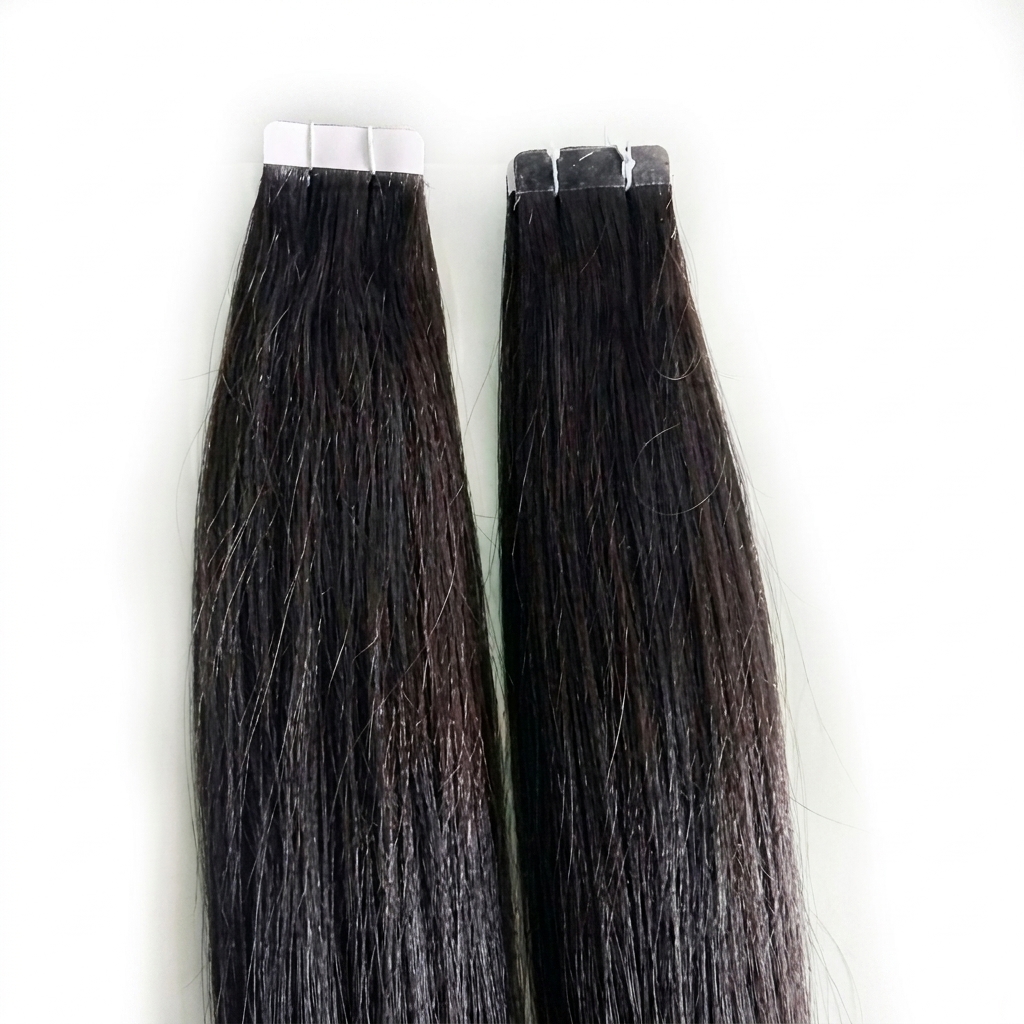
Market option: Vietnamese tape-in hair extensions
Vietnamese tape-in hair extensions can be useful for salon clients who want a flatter, lighter and more discreet install. Tape-ins can look natural when installed correctly and can be easier to blend than bulkier methods.
Best for: professional salons, semi-permanent extension clients and brands that can support install education.
Why it is worth testing: tape-ins can lie close to the scalp and create a natural look when the hair color, texture and density match the client. They can be attractive for salon buyers who want a flat install.
Wholesale risk to check: adhesive quality. Even if the hair is good, weak tape can slip, leave residue or fail too quickly. Tape-ins also require correct installation and removal, so they are not ideal for every buyer.
Proof to request before sample: ask for tape close-up, adhesive quality proof, shedding test, gram weight per pack, length proof, color match, replacement policy and whether extra tape tabs are available.
What to confirm before bulk: confirm tape quality, pack weight, pieces per pack, adhesive durability, removal guidance and replacement support.
Choose this if: your buyers are salon professionals or experienced users.
Skip this if: your business cannot support installation education.
Note: Only list tape-ins as a RaviHair product after confirming live SKU availability and QC proof.
Market option: Vietnamese clip-in hair extensions
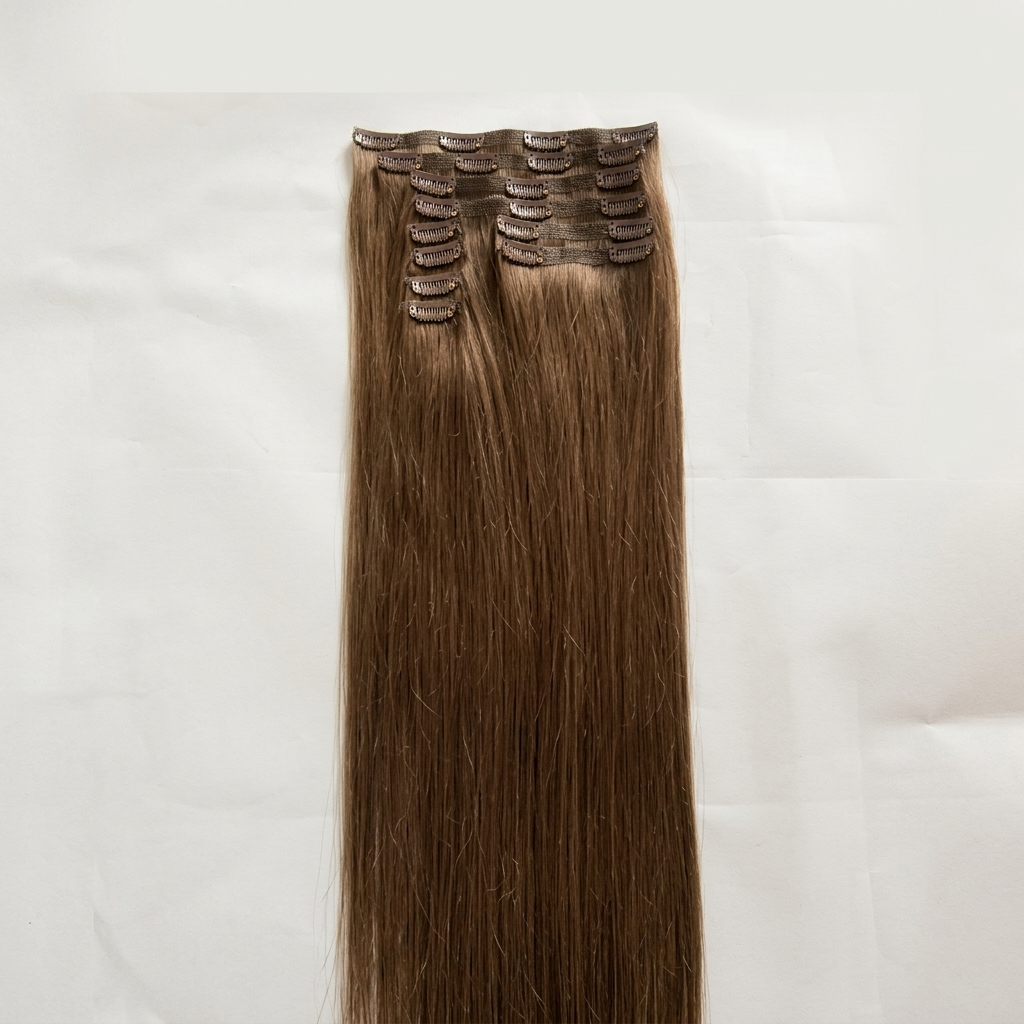
Vietnamese clip-in hair extensions are useful for temporary styling. They can fit retail buyers who want length or volume without a semi-permanent install.
Best for: retail buyers, fashion buyers, beauty stores and temporary styling customers.
Why it is worth testing: clip-ins can be applied and removed by the user, making them attractive for fashion, events and occasional wear. Buyers can change their look without committing to tape, glue, sewing or salon installation.
Wholesale risk to check: clip strength and comfort. Weak clips can slip. Heavy clip-ins can feel uncomfortable. Poorly matched color or texture can make the result obvious.
Proof to request before sample: ask for clip close-up, attachment proof, weight per set, number of pieces, true length measurement, texture match, shedding test and packing proof.
What to confirm before bulk: confirm set structure, clip quantity, clip strength, weight, length, texture, color and packing.
Choose this if: your buyers want easy temporary styling.
Skip this if: your market mainly wants professional sew-ins, wigs or wholesale bundles.
Note: Only list clip-ins as a RaviHair product after confirming live SKU availability and QC proof.
Market option: Vietnamese keratin tip extensions
Vietnamese keratin tip extensions are used for strand-by-strand salon installs. They may include U-tip, I-tip or other pre-bonded forms depending on supplier capability.
Best for: trained salon professionals and buyers who want strand-by-strand movement.
Why it is worth testing: keratin tip extensions can create a more distributed install. When applied correctly, they can move naturally and blend well because the hair is installed in smaller sections rather than large wefts.
Wholesale risk to check: bond quality and installation skill. Weak keratin bonds can shed or slip. Poor installation can damage the client’s hair or create discomfort.
Proof to request before sample: ask for tip close-up, bond strength proof, shedding test, strand count, gram weight per pack, true length measurement and processing history.
What to confirm before bulk: confirm tip type, bond material, strand count, pack weight, length, color, texture and replacement rule.
Choose this if: your buyers are trained salon professionals.
Skip this if: you cannot provide installation guidance or your buyers are beginners.
Note: Only list keratin tip extensions as a RaviHair product after confirming live SKU availability and QC proof.
Market option: Vietnamese ponytail extensions
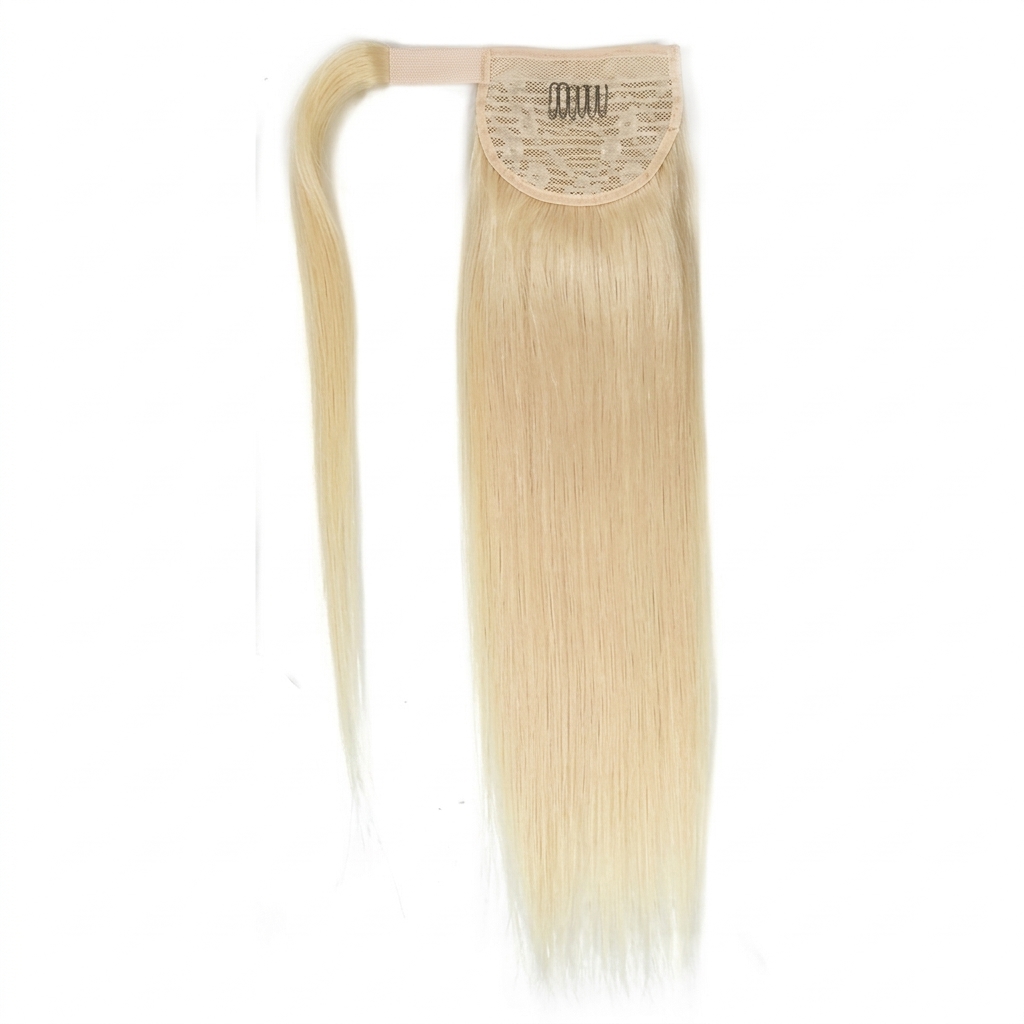
Vietnamese ponytail extensions are a good product for buyers who want a fast visual transformation. They can be attractive for retail, fashion, events, social media content and beauty stores.
Best for: retail buyers, fashion buyers, beauty stores and social-media sellers.
Why it is worth testing: a ponytail extension can add length and volume quickly when the attachment is secure. The buyer understands the finished look immediately, and the product is easy to demonstrate in photos or videos.
Wholesale risk to check: attachment strength and weight. If the ponytail is too heavy, it may feel uncomfortable. If the attachment is weak, it may slip. If the texture or color does not match, the result can look artificial.
Proof to request before sample: ask for attachment close-up, weight proof, length proof, texture proof, color match, comb or wrap structure, shedding test and packing proof.
What to confirm before bulk: confirm weight, attachment method, comb/wrap structure, length, texture, color and packing.
Choose this if: your buyers want fast styling products.
Skip this if: your supplier cannot show the attachment clearly.
Note: Only list ponytail extensions as a RaviHair product after confirming live SKU availability and QC proof.
How to choose Vietnamese hair extensions by buyer type
The right Vietnamese hair extension depends on your buyer’s skill level, final use and maintenance expectation.
|
Buyer type |
Better extension option |
Why it fits |
|
New hair vendor |
Hair bundles |
Easier to inspect, sell and reorder |
|
Salon owner |
Bundles, closures/frontals, tape-ins, keratin tips |
Fits professional install services |
|
Wig maker |
Bundles, bulk hair, closures, frontals |
Better for custom unit construction |
|
Retail buyer |
Clip-ins, ponytails, wigs |
Easier to understand and use |
|
Premium buyer |
Raw bundles, wigs, Double Drawn extensions |
Stronger quality positioning |
|
Braider/custom maker |
Bulk hair |
Flexible for braiding and ventilating |
|
Importer |
Controlled extension order by SKU |
Better stock planning and repeat supply |
If you are unsure what to test first, start with Vietnamese hair bundles. They are usually easier to inspect and less complex than tape-ins, keratin tips or finished wigs.
Product form vs qc risk
Not every Vietnamese hair extension has the same QC risk. Some products are easier to inspect because you mainly check the hair. Others require both hair QC and construction QC.
|
Product form |
QC complexity |
What can go wrong |
|
Bundles |
Lower |
Underweight, short length, thin ends, weak weft |
|
Weft hair |
Lower-medium |
Shedding, bulky stitching, weak track |
|
Bulk hair |
Medium |
Mixed direction, unclear alignment, production waste |
|
Closures |
Medium |
Lace visibility, knots, density, parting mismatch |
|
Frontals |
Medium-high |
Hairline, lace, knots, density, texture mismatch |
|
Wigs |
High |
Cap, lace, density, hairline, construction, texture |
|
Tape-ins |
High |
Adhesive slip, residue, pack weight inconsistency |
|
Clip-ins |
Medium |
Weak clips, uncomfortable weight, color mismatch |
|
Keratin tips |
High |
Bond slip, shedding, installation sensitivity |
|
Ponytails |
Medium |
Weak attachment, heavy weight, poor blend |
For a new supplier, lower-complexity products are usually safer. After the supplier proves consistency with bundles or weft hair, you can consider more complex extension products.
Drawn grade for Vietnamese hair extensions
Drawn grade affects price, fullness and buyer expectation.
Single Drawn is usually the lower entry option. It can work for price-sensitive buyers, but the ends will look more naturally tapered.
Double Drawn is often the safer middle option for wholesale. It gives better end fullness than Single Drawn without reaching the highest premium price.
Super Double Drawn is the premium fullness option. It can work for buyers who want fuller ends, premium installs, long lengths or luxury-looking wigs.
For practical buyer education, Single Drawn may have around 40–45% of strands reaching the same length, Double Drawn around 60–65%, and Super Double Drawn around 80–85%.
Before accepting a drawn grade, ask for:
-
Ends close-up.
-
Hanging hair video.
-
Hand-spread proof.
-
True length measurement.
-
Gram scale proof.
-
Same-length comparison if available.
Do not judge grade only by the top of the bundle. The bottom of the hair shows the real fullness.
Raw, virgin and remy claims
Vietnamese hair extensions can be marketed as raw, virgin or Remy, but wholesale buyers should verify these words before using them in their own sales copy.
Raw hair usually refers to minimally processed hair after collection, but suppliers may define it differently.
Virgin hair usually means the hair has not been chemically treated. One-donor virgin hair is a stricter premium claim.
Remy hair refers to cuticle alignment and hair direction. Remy hair is not fake hair, but it is not the same as one-donor virgin hair.
Ask the supplier:
-
What do you mean by raw?
-
What do you mean by virgin?
-
Is the hair Remy?
-
Is it one-donor, multiple-donor or mixed?
-
Has the hair been dyed, bleached, steamed, coated, acid-washed, silicone-coated or chemically treated?
-
Is the hair Single Drawn, Double Drawn or Super Double Drawn?
-
Can you show current-batch proof before shipping?
The safer supplier is the one that can define the product clearly and prove the actual batch before shipping.
Price factors for Vietnamese hair extensions
Vietnamese hair extension price depends on product form, hair type, length, grade, texture, color, construction and order quantity.
The price can change based on:
-
Product form: bundles, bulk hair, wigs, closures, frontals, tape-ins, clip-ins, keratin tips or ponytails are not priced the same way.
-
Length: longer hair costs more and may be harder to source.
-
Weight: price must match grams per bundle, pack, set, wig or kg.
-
Drawn grade: Double Drawn and Super Double Drawn cost more than Single Drawn.
-
Texture: bone straight, wave and curl may add finishing cost or QC requirements.
-
Color: natural black/1B is lower risk; 613 and fashion colors add processing risk.
-
Construction: lace, cap, clip, tape, keratin bond or ponytail attachment adds cost.
-
MOQ: sample order and bulk order may have different pricing.
-
Shipping: final landed cost includes shipping and possible payment fees.
For wholesale buyers, the cheapest quote is not always safest. A low price can become expensive if the product is underweight, short, thin at the ends, poorly constructed or different from the approved proof.
What to check before ordering a sample
Before approving a sample, compare the evidence you receive with Ravi Hair’s published quality-control standards. This helps you record the same checks for the sample and any later bulk batch.
A sample order should test both hair quality and product construction.
Use this checklist before payment:
-
Extension type: bundles, weft hair, tape-in, clip-in, keratin tip, ponytail, wig, closure, frontal or bulk hair.
-
Hair type: raw, virgin, Remy, processed or mixed.
-
Texture: straight, bone straight, body wave, loose wave, deep wave, water wave, curly, kinky straight or kinky curly.
-
Length: confirm how straight, wavy and curly hair are measured.
-
Weight: gram weight per bundle, pack, set or wig.
-
Drawn grade: Single Drawn, Double Drawn or Super Double Drawn.
-
Color: natural black, 1B, 613, brown, burgundy, highlight, piano or ombre.
-
Construction detail: weft, tape, clip, tip, cap, lace, attachment or bulk direction.
-
Processing history: dyed, bleached, steamed, acid-washed, silicone-coated or chemically treated.
-
Sample shipping method and estimated delivery time.
-
Replace, refund or credit rule if the sample does not match approved proof.
For photos, ask for hero, model/reference, texture close-up, construction close-up, ends/hand photo and packing proof.
For video, ask for gram scale, true length measurement, wet-to-dry comeback for wave or curl, pull/stretch test, comb-through, construction close-up, lace close-up if relevant and packing proof.
What to confirm before bulk order
Bulk proof should confirm the actual extension order, not only the sample.
Before approving shipment, confirm:
-
Final order list by extension type, texture, length, color, grade and quantity.
-
Hair type and processing history for each SKU.
-
Gram weight per item and total order weight.
-
True length after stretching.
-
Texture match across all pieces.
-
Ends fullness by drawn grade.
-
Construction quality: weft, tape, clip, tip, cap, lace or attachment.
-
Wet-to-dry proof for wave or curl textures.
-
Wash proof and dry-after-wash proof for bone straight.
-
Lace, knots, parting, density and hairline if included.
-
Color matching proof for 613 and colored extensions.
-
Dryness and shedding proof for blonde or processed hair.
-
Current-batch videos, not old sample videos.
-
Packing list before shipping.
-
Carton, label and packing proof.
-
Shipping method, tracking process and receiver details.
-
Replace, refund or credit rule if shipped goods do not match approved proof.
Do not approve a bulk extension order only because the sample looked good. Approve after the actual batch matches your specs.
Processing time and claim rule to confirm
Before sending payment or approving production, use the Order & Payment Policy to make sure the final specifications and approved proof are recorded in writing.
Before payment, ask whether your order is a simple catalog product or a more complex custom extension order.
Simple products such as natural black bundles or common wig/bundle sets may be easier to process. More complex orders such as tape-ins, keratin tips, custom ponytails, 613 hair, colored hair, lace wigs, large lace pieces or difficult textures usually need more time and stricter confirmation.
Before you promise your own customer, ask the supplier to confirm:
-
Whether the order is catalog or custom.
-
Whether it includes color, lace, wig construction, tape, clips, keratin tips, ponytail attachment or difficult texture.
-
Estimated processing time before payment.
-
Whether the order qualifies for claim handling.
-
Whether the hair must remain unwashed, uncut, unused and in original condition for claim review.
-
How many days after receiving the goods you can report an issue.
This protects both sides. Your business should know the timeline and claim conditions before reselling the order.
Common mistakes when buying Vietnamese hair extensions
The first mistake is treating all hair extensions as the same product. Bundles, tape-ins, clip-ins, wigs and bulk hair need different QC.
The second mistake is choosing only by texture photo. Construction quality also matters: weft, tape, clip, tip, cap or lace can create complaints even when the hair looks good.
The third mistake is not checking weight. Different extension types use different weights, so confirm grams per pack, set, bundle, wig or kg.
The fourth mistake is ignoring installation skill. Tape-ins and keratin tips are better for professional installation. They are not always beginner-friendly.
The fifth mistake is not checking processing history. Colored, blonde, highlighted or curled products may be processed and should be described honestly.
The sixth mistake is approving bulk based on old sample videos. Always request current-batch proof.
The seventh mistake is not confirming the claim rule before payment. Before bulk, ask what happens if length, weight, texture, color, construction, lace or packing list does not match approved proof.
The eighth mistake is over-listing products your supplier cannot consistently fulfill. If a supplier mainly controls bundles, closures/frontals, wigs and bulk hair, do not build your catalog around tape-ins, clip-ins, keratin tips or ponytails until live SKUs and QC proof are confirmed.
When ravihair may be a good fit
RaviHair may be a good fit if you are looking for Vietnamese hair extensions for African or Nigerian wholesale buyers and want proof before sample or bulk order.
You can contact RaviHair when you need help comparing Vietnamese hair bundles, weft hair, wigs, closures, frontals, bulk hair, straight hair, bone straight hair, body wave, deep wave, water wave, curly hair, drawn grades, lengths, colors and wholesale quantities.
If RaviHair offers tape-in, clip-in, keratin tip or ponytail extensions at the time of publishing, add those categories only after confirming live SKUs and QC proof. Do not list them as RaviHair products unless they are actually available.
Before ordering, you can ask for product guidance, hair type clarification, processing history, gram proof, true length proof, construction proof, weft proof, ends proof, wet-to-dry proof, wash proof, lace matching, color matching, packing proof and sample-to-bulk support.
Tell RaviHair your buyer type, target market, preferred extension type, length range, texture, grade, color, quantity, destination and shipping preference. A safer supplier should help you choose the product form your buyers can actually install, resell and reorder.
Need help choosing Vietnamese hair extensions before your next wholesale order? Message RaviHair on WhatsApp: +84 818293277.
Faq
What are Vietnamese hair extensions?
Vietnamese hair extensions are Vietnamese human hair products used to add length, volume or style. They may include bundles, weft hair, wigs, closures, frontals, bulk hair, tape-ins, clip-ins, keratin tips or ponytails depending on supplier capability.
What Vietnamese hair extension should I test first?
Vietnamese hair bundles are often the safest first sample because they are easier to inspect for weight, length, weft, ends, texture and shedding.
Are Vietnamese tape-in extensions good for wholesale?
They can be useful for salon buyers, but tape quality and adhesive performance must be checked. Ask for tape close-up, adhesive proof, gram weight, length proof and replacement policy. Only list them if the supplier has live SKUs and QC proof.
Are Vietnamese clip-in extensions good for retail buyers?
Clip-ins can be good for temporary styling and retail buyers who want easy use. Check clip strength, comfort, weight, length, color match and shedding before bulk.
Are Vietnamese wigs considered hair extensions?
Wigs are not always described as extensions, but they serve a similar buyer need: adding length, volume or style. For wigs, check cap, lace, knots, density, hairline and true length.
Are Vietnamese closures and frontals hair extensions?
Closures and frontals are often used with extensions rather than sold as general hair extensions. They are important for wigs and installs because they complete the top or hairline area.
What proof should I ask before buying Vietnamese hair extensions in bulk?
Ask for gram scale proof, true length measurement, texture close-up, construction close-up, ends proof, wet-to-dry proof for wave or curl, wash proof for bone straight, lace proof if relevant, color proof and packing proof.
Can Vietnamese hair extensions be colored?
Some Vietnamese human hair extensions may be colorable, but you should not promise bleaching or 613 results without strand testing or supplier proof. If the product is already colored, disclose processing clearly.
Ask Ravi Hair
Get advice for your next order
Factory support
Make the guide practical
Ask for current stock videos, sample guidance, packing proof, and export support before you approve an order.
- Real product video before shipping
- Sample support before bulk buying
- Clear consultation for your market